Engineered to track liabilities cleanly before they manifest. We map invisible structural anomalies to protect enterprise capital assets and ensure operational continuity.
Precision solution frameworks deployed to systematically eliminate structural failure risks across your facility layers.
An infrared thermography audit relies on advanced non-contact radiometer architectures to capture and analyze operational temperature patterns across local panels and high-stress points. By documenting precise thermal values, our field engineers spot faults cleanly before failure events can occur.
We deliver complete analytics across high-capacity grid frameworks, custom mechanical compressor profiles, structural insulation boundaries, and specialized refractories.
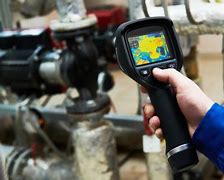
Evaluating the mathematical realities and direct capital safety advantages of periodic infrastructure profiling.
Minor structural anomalies left unmonitored scale quickly into severe systemic faults. A simple loose balance terminal highlighted through non-contact profiling takes only moments to secure. Left uncorrected, it presents a continuous fire threat, severe arc risk, and unscheduled system downtime liabilities.
How our field hardware matrices scan, record, and resolve hidden structural system vulnerabilities.
Precision infrared arrays continuously record radiation values emitted by running hardware assets.
Radiometric computing engines process capture profiles into highly detailed delta temperature maps.
Systems flag unexpected heat vectors instantly to alert structural maintenance engineers.
Our imaging hardware maps a comprehensive array of functional mechanical and grid discrepancies.
Loose electrical connections
Overloaded circuits or phases
Deteriorated or damaged insulation
Bearing failure
Insufficient lubrication
Steam leaks
Strategic structural value targets unlocked through non-contact infrared monitoring protocols.
While technical thermal instrumentation maps temperature profiles across components clearly, physical inspection remains vital. Our diagnostic engineers integrate baseline thermodynamic monitoring logs with structural asset tracking to ensure high precision data.